How Much Does a Mommy Makeover Cost? A 2026 US Breakdown
- Mommy makeover cost in the US typically runs $12,000–$25,000 for a combined tummy tuck and breast procedure, all-in.
- The combination of procedures — not geography — is the single biggest driver of price: two procedures cost far less than four.
- A complete quote itemizes surgeon fee, anesthesia, facility, implants, garments, and follow-up — ask for all five before comparing prices.
- Hidden costs (childcare, missed work, medications, garments) commonly add $1,500–$5,000 beyond the surgical quote.
- Insurance almost never covers a mommy makeover; financing (CareCredit, Prosper, personal loans) is how most women pay.
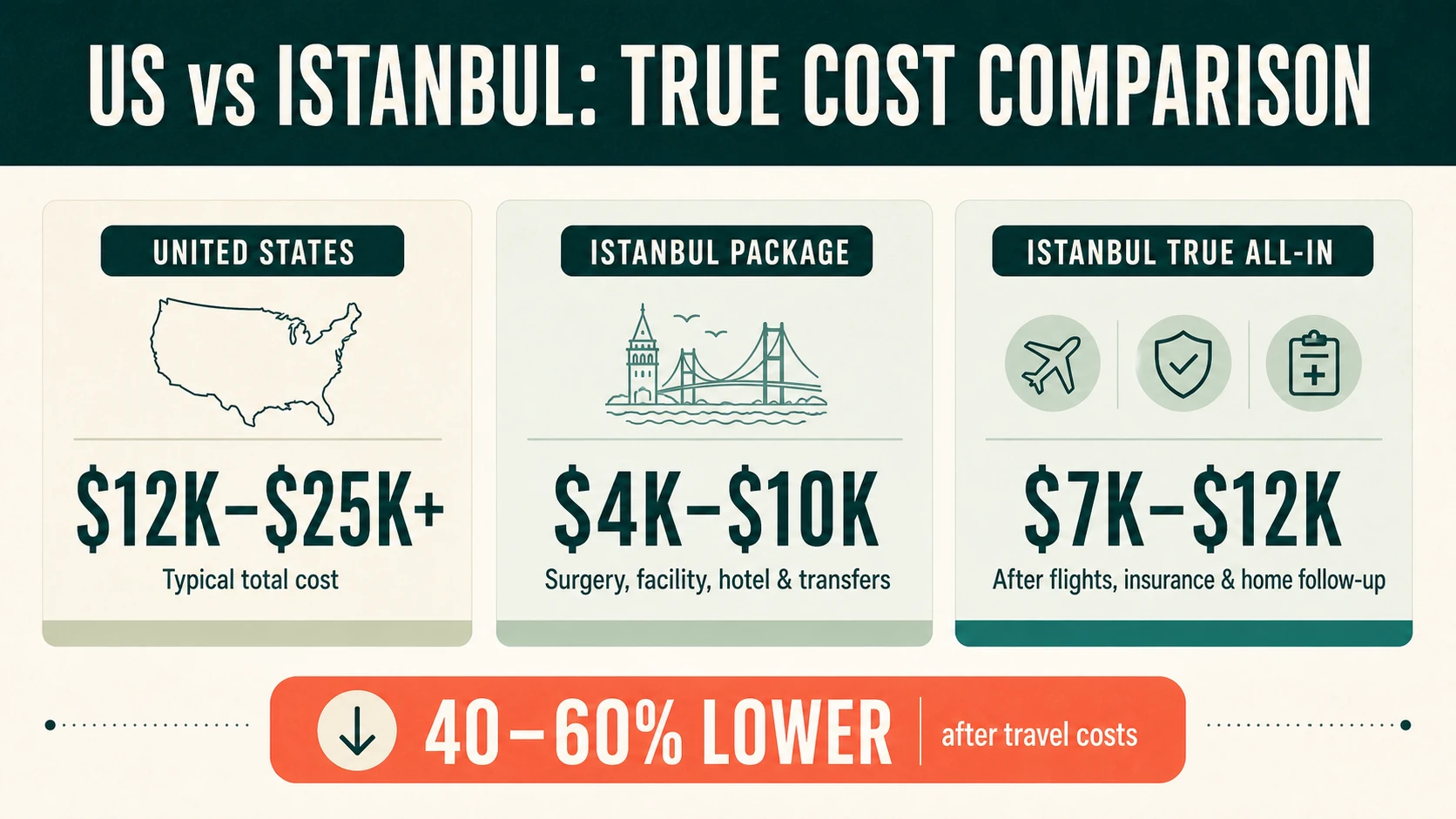
- Turkey packages run 40–60% below US pricing, but the gap narrows once travel and follow-up costs are counted.
If you’ve started researching mommy makeover cost, you’ve probably already noticed the numbers all over the place — one site says $8,000, another says $25,000. Both can be correct. “Mommy makeover” is not a single, fixed-price operation; it’s a custom bundle of procedures, and the bundle you choose determines the price far more than where you live or which surgeon you see. This guide breaks down what actually drives cost of mommy makeover pricing in 2026, what a real quote should include, and where to go for the details on insurance, financing, and international pricing.
Average Total Cost Range
According to ASPS 2024 statistics, the average surgeon’s fee alone runs approximately $6,500 for abdominoplasty, $5,500 for a breast lift, $4,500 for breast augmentation, and $4,000 per area of liposuction.1 Those are surgeon fees only — anesthesia, facility, and implants add on top. Once you total a realistic combination, the figure this site uses for a US mommy makeover is $12,000 to $25,000.
That is a national all-in range, not a quote. Combination-by-combination ranges, regional bands, and the 12-line quote checklist live on the 2026 cost breakdown — they are not repeated here.
Why Cost Varies So Much
The question “how much does a mommy makeover cost” doesn’t have one answer because a mommy makeover isn’t one procedure — it’s whichever procedures you and your surgeon decide to combine. A woman having a tummy tuck and nothing else pays for one operation. A woman having a tummy tuck, breast lift, breast implants, and flank liposuction pays for four, performed under one longer anesthesia session. The combination is the single biggest cost driver, well ahead of geography or surgeon reputation.
Beyond the combination itself, economic research on cosmetic surgery pricing identifies a handful of secondary factors that shift price within any given combination: local cost of living and real estate (major metro surgeons charge more), surgeon experience and demand, facility type (hospital vs. accredited outpatient center), and implant brand if breast augmentation is involved.2 None of these secondary factors comes close to the effect of adding or removing a whole procedure from your plan.
Cost by Combination
Combination ranges are published once, on the how-much breakdown. This hub does not reprint that table. The short version: a tummy tuck plus breast lift is the usual floor of the $12,000–$25,000 band; adding liposuction, an arm lift, or a BBL is how quotes climb toward the top of it.
What’s Included in a Quote
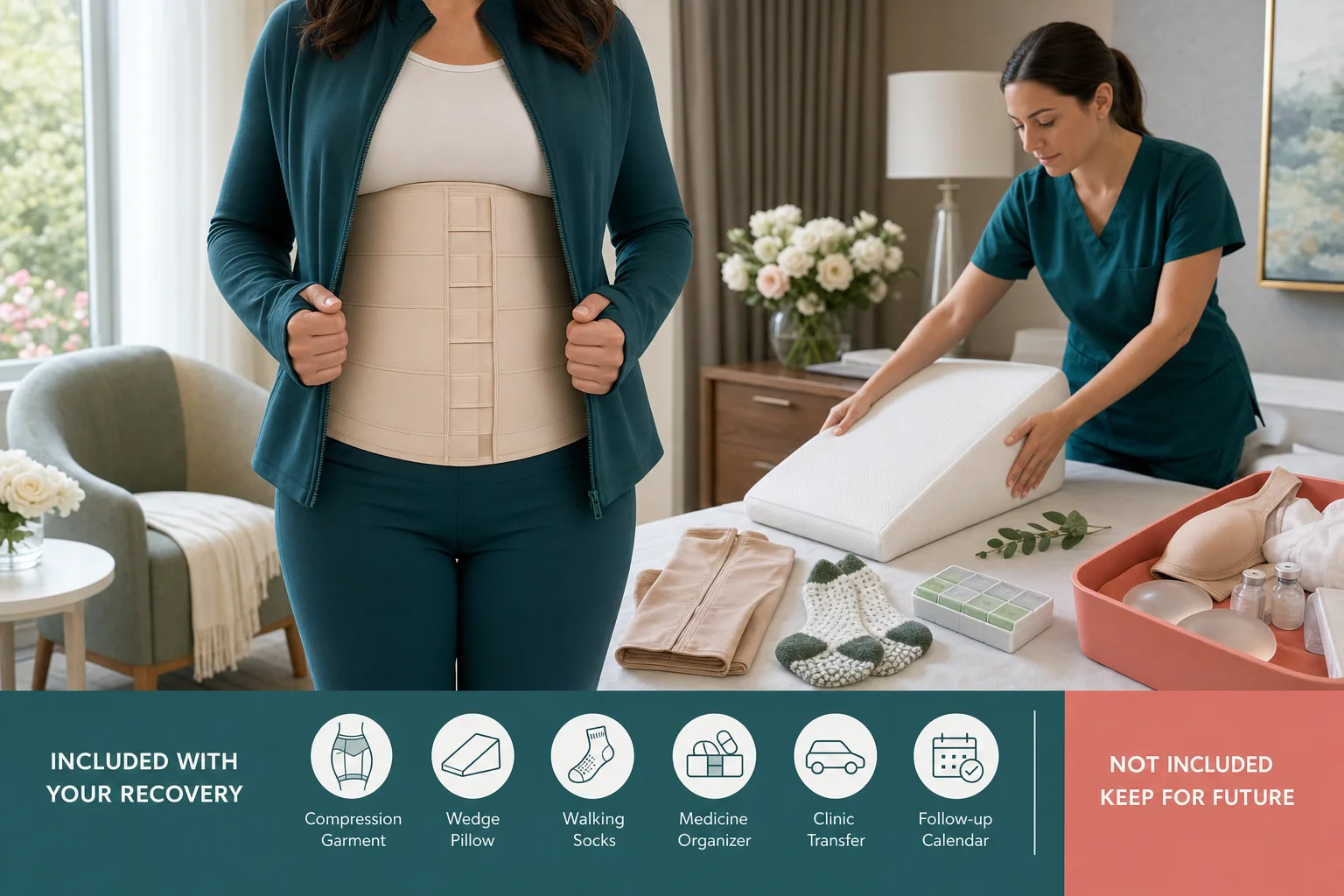
A trustworthy mommy makeover price quote is itemized, not a single lump number. At minimum, ask your surgeon’s office to break out five line items: the surgeon’s fee (usually 50–60% of the total and the piece that varies most by experience), the anesthesia fee (a total case fee, typically $1,500–$3,000 for a combined mommy makeover), the facility or operating-room fee ($1,500–$4,000 depending on setting), implants if breast augmentation is part of your plan (roughly $1,000–$2,000 per pair), and compression garments and follow-up visits, which most surgeons bundle into the quoted fee.
If a quote doesn’t separate these, ask for a revised version before comparing it to anyone else’s price — a $9,000 number that excludes anesthesia and facility fees isn’t actually cheaper than a $15,000 number that includes them. Our packages guide walks through exactly what US and international quotes tend to include and exclude, line by line.
Hidden Costs
The surgical quote is rarely your final out-of-pocket number. Most women underestimate a second layer of costs that sit outside the surgeon’s fee entirely: pre-operative testing (bloodwork, mammogram, EKG if indicated, $200–$800), prescription medications ($100–$400), extra garments and scar-care supplies beyond what’s included ($200–$500), childcare during 2–4 weeks of restricted activity (often $1,000–$4,000+), and lost income from time off work, which is frequently the single largest hidden line item.
If a revision is ever needed, that’s a further cost most quotes don’t mention upfront, though it isn’t common. Altogether, these add-ons typically total $1,500–$5,000 on top of the headline price — budget for them before you commit, not after. The packages guide covers the full checklist of what’s usually excluded from a quote.
Does Insurance Cover Any of It?
Generally, no. Every major US insurer classifies a mommy makeover as elective cosmetic surgery, and cosmetic exclusions are explicit in virtually every policy. That said, there are narrow, specific exceptions: if a diagnosed hernia is repaired during your abdominoplasty, or if a breast reduction meets strict medical-necessity criteria (documented chronic pain, failed conservative treatment, minimum tissue removal), that specific component may be billed to insurance — while the cosmetic portions performed alongside it remain your responsibility.
Treat any partial coverage as a bonus, not a budgeting assumption. Our dedicated insurance coverage guide covers exactly which components sometimes qualify, what documentation insurers require, and how to check your own policy before you plan your budget around it.
Financing Options
Because insurance is rarely a factor, most women pay for a mommy makeover out-of-pocket or through financing. The most common routes are medical credit cards like CareCredit (0% promotional periods that convert to retroactive deferred interest if not paid off in time), healthcare-specific installment lenders like Prosper Healthcare Lending (fixed-rate, no deferred-interest surprises), personal loans from a bank or credit union, and in-house surgeon payment plans.
Each option carries different risk, and the CFPB has flagged deferred-interest medical credit cards specifically for their potential to surprise patients with large retroactive interest charges.3 Our financing guide compares APRs, terms, and the fine print across every major option.
Cost in the US vs Turkey
Mommy makeover cost in Turkey typically runs 40–60% below comparable US pricing — often $4,000–$10,000 for an all-inclusive package versus $12,000–$25,000+ in the US for the same combination. The Turkey figure usually bundles hotel nights and transfers into the price; the US figure usually doesn’t need to, since there’s no travel involved. Once you add flights, travel insurance, and the cost of managing any complication after you’re home — where your original surgeon isn’t available — the real gap narrows, though it typically remains substantial.
The honest comparison isn’t just price; it’s price plus the follow-up-care trade-off. Our full US vs Turkey cost comparison lays out the numbers side by side, and our Istanbul guide covers what to verify about a specific clinic before you book.
Comparing Quotes Safely
The most common mistake in mommy makeover shopping is comparing two quotes that don’t describe the same operation. Before you compare numbers side by side, confirm each quote lists the exact same procedures, the same implant brand and type (if applicable), a named surgeon (not “our surgical team”), and an itemized breakdown of surgeon, anesthesia, facility, and garment fees.
Treat a suspiciously cheap quote as a warning sign, not a bargain. A price that sits 30–40% below the regional or national average — in the US or abroad — usually means one of a few things: an uncertified surgeon, a non-accredited facility, an anesthesia team shared across multiple simultaneous cases, or fees that reappear later as “extras.” Ask directly what’s excluded, verify board certification independently, and never let urgency (“this price is only good until Friday”) push you toward a decision you haven’t had time to vet.
Frequently Asked Questions
-
A combined mommy makeover in the US typically costs $12,000 to $25,000 in 2026, including surgeon, anesthesia, facility, and implants when used. Combination-by-combination ranges are on the how-much page so this site does not publish two different floors for the same operation.
-
The biggest driver is scope: a combination of two procedures costs far less than one combining four. Geography, surgeon experience, and facility type also shift price within a given combination, but the combination itself explains most of the variation.
-
A complete quote itemizes the surgeon's fee, anesthesia fee, facility/operating room fee, implants if applicable, compression garments, and standard follow-up visits. If a quote lists only one number with no breakdown, ask for an itemized version before comparing it to another price.
-
Generally no — it's classified as elective cosmetic surgery. Narrow exceptions exist for specific, separately diagnosed components performed at the same time, such as hernia repair during abdominoplasty or breast reduction for documented medical symptoms.
-
Common options include medical credit cards like CareCredit, healthcare-specific lenders like Prosper, personal loans, and in-house surgeon payment plans. Each has different interest structures and risks, particularly deferred-interest promotional periods that charge retroactive interest if not paid off in time.
-
Turkey packages typically run 40–60% less than comparable US pricing, often $4,000–$10,000 versus $12,000–$25,000+ in the US. Travel, follow-up, and potential revision costs narrow the real-world gap somewhat, but it usually remains substantial.
-
Plan for pre-operative lab work, prescription medications, extra garments, childcare during recovery, and lost income from time off work. These commonly total $1,500–$5,000 beyond the surgical quote, regardless of whether surgery is in the US or abroad.
-
Be cautious of quotes priced 30–40% below the regional average with no itemized breakdown, unverifiable board certification, an unaccredited facility, or pressure to book quickly. Legitimate practices provide written, itemized pricing and welcome questions about inclusions and exclusions.
Sources
- American Society of Plastic Surgeons (ASPS). 2024 Plastic Surgery Statistics Report. plasticsurgery.org.
- Shaffrey EC, Wirth PJ, Moura SP, et al. The Price Is Right? An Economic Analysis of Factors Influencing Cosmetic Surgery Prices. Aesthet Surg J. 2023;43(9):1036-1045.
- Consumer Financial Protection Bureau (CFPB). Report on Medical Credit Cards and Deferred-Interest Financing. CFPB. 2023.